What a Coconut Farm Tour in Roatan Is Like
The first thing you notice is the scent: warm earth, green husks, and sweet coconut carried on the island breeze. A coconut farm tour in roatan is not a polished theme-park stop. It is a chance to see one of the Caribbean’s most familiar fruits in the place where it grows, learn how island families use it, and add a slower cultural moment to a beach or sightseeing day.
For cruise guests and first-time visitors, this type of experience works especially well as part of a private or small-group island tour. You get picked up close to port, travel with a local guide, and enjoy the scenic roads without figuring out taxis, directions, or timing on your own. The farm visit can be a refreshing change of pace between reef views, wildlife encounters, and time at West Bay Beach.
What Happens on a Coconut Farm Tour in Roatan
A coconut-focused stop is usually relaxed and personal. Rather than moving through a large commercial plantation, guests may visit a local property, garden, roadside stand, or cultural area where coconut palms are part of everyday island life. What you see depends on the location, the season, and what the host has available that day.
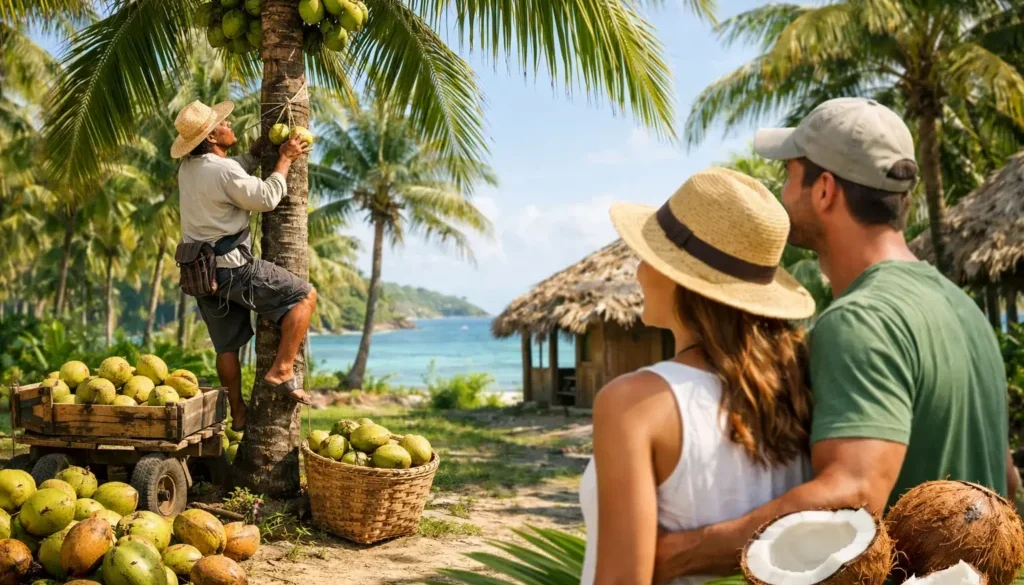
Your guide can explain how coconuts grow, why the trees thrive in Roatan’s tropical climate, and how each stage of the fruit is used. Young green coconuts hold cool, lightly sweet coconut water. Mature brown coconuts have firmer meat that can be grated, pressed, cooked, or turned into familiar treats. The husk and shell can also be put to work instead of discarded.
The best visits feel hands-on. You may watch a coconut being opened with a machete by an experienced local, sip fresh coconut water, or taste the soft jelly-like meat inside a young coconut. If coconut oil, candies, bread, or other handmade products are available, your guide can help explain what is local, what is seasonal, and what makes a worthwhile souvenir.
It Is Culture, Not Just a Photo Stop
Coconut palms are woven into island life. They provide shade along the shore, ingredients for home cooking, and materials that have long been useful to Caribbean communities. A good guide adds that context. You are not simply looking at a tree. You are hearing how food, weather, work, and tradition meet in a single island crop.
That local perspective matters, especially if you want more than a drive past scenic viewpoints. Roatan has beautiful beaches and lively attractions, but its everyday culture is what gives the island its character. A farm or coconut stop lets you slow down long enough to see it.
How to Build a Coconut Farm Tour Into Your Day
For most visitors, a coconut stop is best paired with other Roatan highlights. On its own, it may be a short experience. Combined with island sightseeing, a wildlife encounter, a local lunch, snorkeling, or beach time, it becomes part of a full and well-balanced shore day.
A private island tour offers the most flexibility. Tell your guide that you want local culture and fresh coconut tasting, and they can shape the route around the time you have in port, your group’s interests, and current conditions. Families may prefer a gentle sightseeing and beach combination. Couples might add a scenic viewpoint and a quiet lunch. Active groups can pair culture with ziplining, ATV riding, horseback riding, or reef snorkeling.
Timing is important for cruise passengers. A dependable excursion plan should account for ship arrival and all-aboard times, travel between stops, and enough cushion to return to the port comfortably. That is one reason many guests choose guided transportation instead of trying to coordinate several locations independently.
Charlie’s Roatan Tours can help visitors build a day that feels personal rather than rushed, with round-trip transportation and a local guide who knows how to make the most of your time ashore. The goal is simple: enjoy the island, see what interests you, and get back to your ship with great memories and no transportation stress.
What to Bring for a Comfortable Visit
A coconut farm setting can be rustic, sunny, and occasionally uneven underfoot. Comfortable sandals or closed-toe shoes are a smart choice, particularly if you are combining the stop with a nature activity. Wear lightweight clothing, bring reef-safe sunscreen, and keep sunglasses or a hat handy.
Bring a small amount of cash if you think you may want to purchase a fresh drink, snack, or locally made item. Availability varies, so it is better to see what is offered than to arrive expecting a particular product. A reusable water bottle is also helpful, although fresh coconut water can be a fun tropical alternative during the visit.
If you plan to continue to the beach or snorkeling afterward, pack your swimsuit, towel, and a dry bag for your phone and valuables. Your guide can help keep the day organized, but a little preparation makes transitions between stops much easier.
Is a Coconut Farm Experience Right for Your Group?
This is an excellent choice for travelers who enjoy food, culture, easygoing outdoor experiences, and talking with local people. It is family-friendly when children are curious about how things grow and when adults want an activity that does not require intense physical effort. It also gives multigenerational groups something they can enjoy together.
It may not be the main event for guests who only have one goal: maximum beach time or as many high-adrenaline activities as possible. In that case, a brief coconut stop can still work well on the way to another attraction, but it should be planned as a cultural add-on rather than the center of the day.
Expectations make the difference. This is not typically a large agricultural attraction with scripted demonstrations every hour. It is more authentic than that, and availability can change with weather, harvest timing, and local operations. Travelers who arrive ready for a genuine island experience usually find that flexibility is part of the charm.
Questions to Ask Before You Book
Ask whether the coconut visit is a dedicated stop or included within a broader island sightseeing route. Confirm the total tour duration, pickup details, transportation, and whether admission fees, tastings, or additional activities are included. If anyone in your party has mobility concerns, let the tour operator know in advance so they can recommend the most comfortable option.
It is also helpful to share what your group wants most. Do you want fresh coconut water? A chance to shop for local products? More time at the beach? A stop with monkeys and sloths? The more your guide knows, the easier it is to create an excursion that fits your day instead of following a one-size-fits-all schedule.
Make Room for the Island’s Everyday Magic
A fresh coconut may seem like a small part of a Roatan vacation, but it can become one of the moments guests remember most: cold coconut water on a warm afternoon, a guide sharing a local story, and palms swaying above the road as you head toward your next stop. Leave a little room in your itinerary for those unscripted island moments. They are often what make the day feel truly Roatan.